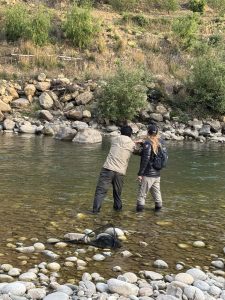
 Fly fishing in Bhutan is an experience that’s as much about the journey as it is about the catch. Here, you’re not just fishing in a river; you’re casting a line in a kingdom built on a philosophy of Gross National Happiness, where deep Buddhist traditions and a profound respect for nature are woven into daily life. It’s a rare opportunity to blend an adventurous angling trip with a deeply enriching cultural journey. The country’s unspoiled rivers and remote, legendary fishing spots are made even more special by the knowledge that your visit directly supports community conservation. If you’re dreaming of an angling adventure that goes far beyond the ordinary, Bhutan will change the way you think about fishing forever.
Why Fly Fishing in Bhutan is So Unique What truly sets Bhutan apart is its unparalleled commitment to conservation. As a predominantly Buddhist nation, the culture respects all living creatures, and fishing for sport is a recent development guided by this ethos. This has resulted in pristine, untouched river ecosystems, where healthy fish populations thrive in their natural state without the pressures found in more commercialized destinations. Since 2022, the government has actively promoted high-end recreational fishing, aiming to balance eco-tourism with environmental protection.
Fish Species: The Targets All fly fishing in Bhutan is strictly catch-and-release, and it is only permitted for four authorized species. · Golden Mahseer – Often called the “tiger of the river,” this is the undisputed holy grail for anglers. Known for its incredible strength, it’s considered one of the world’s toughest freshwater game fish and is also a Buddhist symbol of good luck. Reaching over 3 feet and 40 pounds, the Golden Mahseer is the ultimate trophy on a fly rod. · Brown Trout – These were first introduced to Bhutan in the 1930s from Kashmir. The fish have thrived in the kingdom’s cold, oxygen-rich rivers, today growing to wild and vibrant specimens, with some reaching 10–15 pounds. · Snow Trout – This native fish is actually a member of the carp family. They are powerful fighters on the line and can reach impressive sizes of 15–20 pounds, making for an exciting catch in the higher reaches. · Chocolate Mahseer – A close relative of the golden mahseer, this species is targeted in the lower-elevation rivers and offers another powerful angling challenge.
Prime Fishing Locations Bhutan’s rivers are classified into two categories: Mahseer Waters (typically warmer, southern rivers) and Trout Waters (cooler, central/western rivers). · Western & Central Rivers (Punakha, Paro, Haa, Bumthang) – These crystal-clear, cold rivers are the domain of the wild brown trout. The Haa Valley is particularly legendary; it was the last district in Bhutan to open to tourism and is still among the least visited, offering a truly remote fly fishing experience. · Southern Rivers (Sankosh, Mangde Chhu, Manas River) – These are the headline destinations for anglers seeking the mighty Golden and Chocolate Mahseer. These powerful, jungle-lined rivers provide a completely different, raw adventure.
Best Time to Visit Bhutan’s fishing season is divided into two optimal windows, carefully planned around the weather and spawning seasons. ·
Spring (March to May) – The weather is pleasant, and rivers are generally clear. It’s an excellent time for both trout and mahseer. However, note that some religious closures may occur during parts of this window.
Summer (June to August) – The Mahseer season is closed due to the monsoon rains, which make rivers wild and dangerous for fishing.
Autumn (September to November) – This is arguably the peak period, with ideal weather conditions and hungry fish. November is often the best month for targeting larger specimens of both trout and mahseer.
Winter (December to February) – The Trout season is closed for spawning. Generally, it’s not favorable as fish stay deep in the cold waters.
Essential Regulations & Permits (The Rules) Fishing regulations in Bhutan are strictly enforced, so it’s vital to understand them before you go. · Licensed Guides – All non-Bhutanese anglers must be accompanied by a licensed Bhutanese fishing guide at all times. · “Catch & Release” – This is not just a suggestion; it is the law. Taking fish is prohibited, with the specific aim of ensuring the health of the fish populations for future generations. · Tackle Restrictions – Only artificial flies and lures are permitted, and you must use a single, barbless hook to minimize injury to the fish. · Prohibited Areas – Fishing is not allowed within a kilometer vicinity of any fortresses (dzongs), temples, monasteries, bridges, or other public places. Some entire river sections, like the holy Chamkhar Chhu in Bumthang, are completely off-limits.
Cultural and Religious Closures Fishing is also closed on several auspicious days of the Buddhist calendar. These closures are a profound sign of respect for local beliefs and a key part of the fishing experience. Expect no fishing on: · The 8th, 15th, 30th day of every Bhutanese lunar month. · The entire 1st and 4th months of the Bhutanese religious lunar calendar (dates vary annually, but usually fall between January–March and May–July). · Major Buddhist holidays like Saga Dawa, the birth anniversary of Guru Rinpoche, and Lord Buddha’s Parinirvana.
Conservation: Protecting the Future Fishing in Bhutan is a model of sustainability. The government has established a professional fishing guide training program to ensure all angling is done responsibly. Furthermore, the Fisheries Conservation and Management Fund was established to regulate activities, prevent overexploitation, and support local livelihoods, ensuring the rivers remain healthy for generations to come.
Practical Information for Your Trip Here are a few final logistics to keep in mind as you plan: · Tackle – Most specialist tour operators can provide high-quality rods, reels, and flies. However, it is highly recommended that you bring your own waders, boots, polarized sunglasses, leaders, and tippets to ensure a proper fit and comfort. · Travel Logistics – It is not possible to get a fishing permit independently. All arrangements, including licenses, guides, and transportation, must be made through a licensed Bhutanese tour operator who will handle the entire trip. Travel involves long drives on winding mountain roads.
Ready to Plan Your Trip? A fly fishing trip to Bhutan is an investment in an unforgettable, once-in-a-lifetime experience that combines a world-class angling challenge with incredible cultural immersion. You can search for reputable operators online to find a guide who fits your needs, or read more about its unique culture and conservation efforts to help plan your perfect adventure. I hope this guide helps you get started on planning the ultimate angling pilgrimage. Let us know if any part of the preparation feels a bit overwhelming, and We can help break it down further.